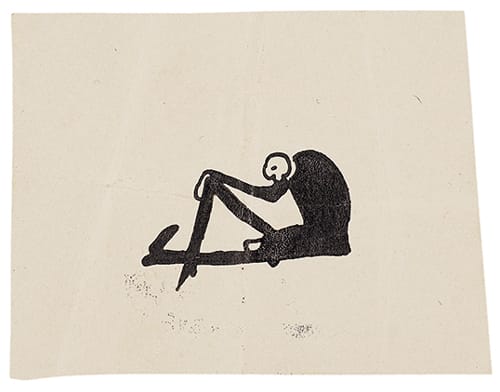
Kafka’s drawings: what survived, what was rescued, and why it matters
Another Kafka, less discussed and only recently visible at scale: Kafka the draftsman.
Posts tagged with notebook, newest first.
Another Kafka, less discussed and only recently visible at scale: Kafka the draftsman.
a poem
This is an example post for the Notebook Lab page, jsut to test how it is rendered. Hello, World: the two words that launched a million programs It’s the most famous “first program”
Kafka’s drawings: what survived, what was rescued, and why it matters
On gray forgetful mornings like this
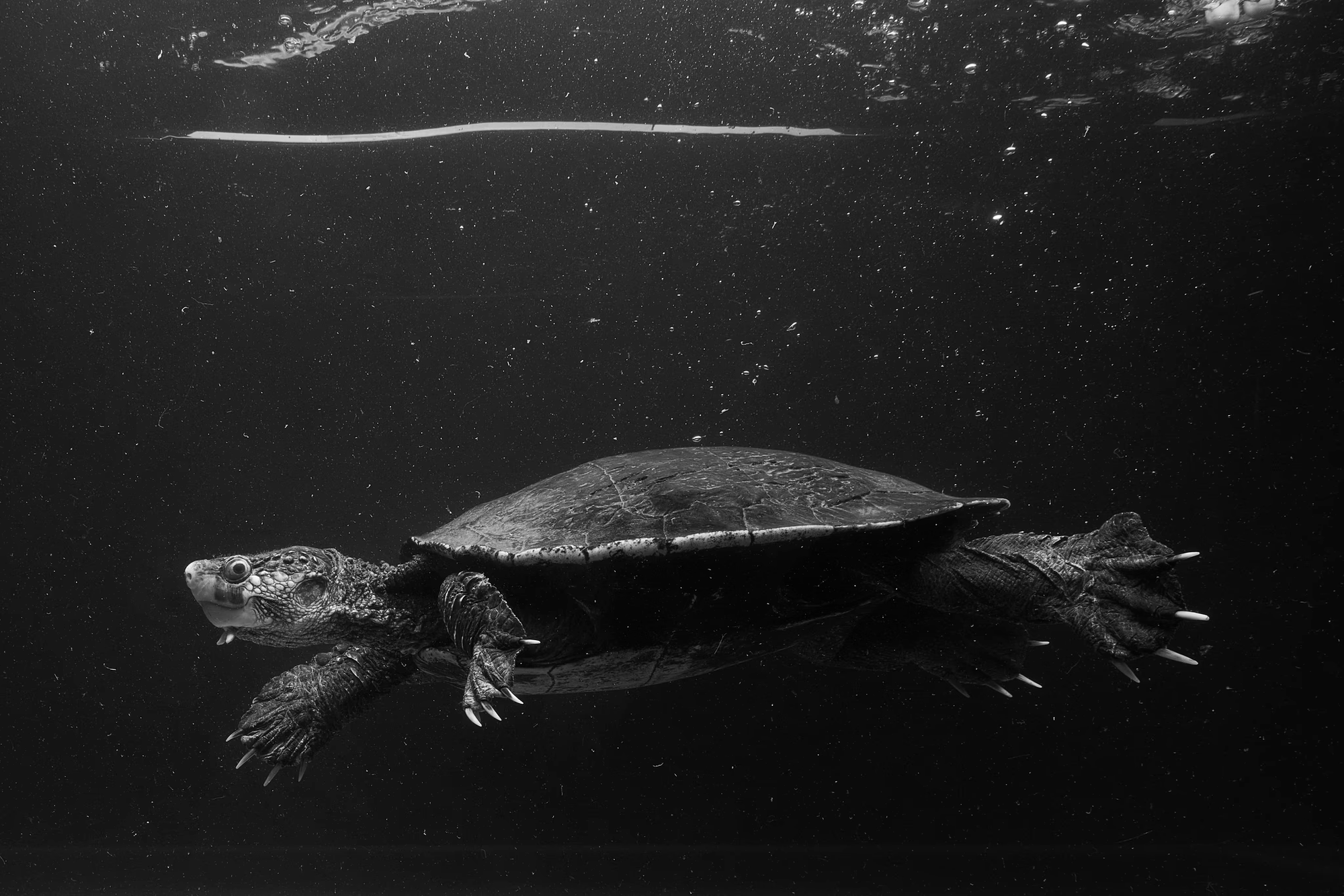
sea turtles would gather in the shallow waters
of the Gulf to discuss issues of self-presentation
and related concerns like, If there were a God
would he have a hard shell and a retractable head,
and whether speed on land
was of any importance to a good swimmer.
They knew that tourists needed to placate
their children with catchy stories, and amuse
themselves with various cruelties
such as turning turtles over on their backs
and watching their legs wriggle.
So the turtles formed a committee to address
How to Live Among People Who Among
Other Atrocities Want to Turn You into Soup.
The committee was also charged with wondering
if God would mind a retelling of their lives,
one in which sea turtles
were responsible for all things
right-minded and progressive, and men
and women for poisoning the water.
The oldest sea turtle among them knew
that whoever was in control of the stories
controlled all the shoulds and should-nots.
But he wasn’t interested in punishment,
only ways in which power could bring about
fairness and decency. And when he finished speaking
in the now-memorable and ever-deepening
waters of the Gulf, all the sea turtles
began to chant, Only fairness, only decency.
—Stephen Dunn
More about Stephen Dunn on the US Library of Congress
This is an example post for the Notebook Lab page, jsut to test how it is rendered.
Hello, World: the two words that launched a million programs
It’s the most famous “first program” in computing: two words that have appeared in countless tutorials, textbooks, classrooms, and terminals. Whether you’re writing C, Python, JavaScript, Rust, or something far stranger, Hello, World! is often the opening move.
As a program, it’s almost comically simple: tell the computer to display a short greeting. But as a ritual, it carries more weight than its few characters suggest. For a developer, seeing those words on-screen means something concrete and satisfying: the toolchain works, the code compiles (or interprets), the runtime runs, and the output appears where you expect it to. It’s the smallest possible “end-to-end” success.
And it’s also a psychological moment: the first time you feel the machine answer back. Not in a sci-fi way—just in the very literal sense that your intent has crossed the boundary from human language to executable instruction and returned as visible proof.
So where did it come from, and why did it stick?
A “Hello, World!” program is a sanity check with a surprisingly broad scope:
This is why it shows up everywhere. It’s small enough to remove distraction, yet complete enough to validate the system.
In C, that canonical minimal version looks like this:
#include <stdio.h>

int main(void) {
    printf("hello, world\n");
    return 0;
}
In Python, it collapses to one line:
print("Hello, World!")
Different languages, different ceremony—but the same underlying signal: the loop is closed; the system responds.
The modern tradition is strongly associated with Brian Kernighan and the early C ecosystem at Bell Labs. The phrase became widely known through the book The C Programming Language (commonly associated with Kernighan and Dennis Ritchie), where a compact example prints “hello, world”.
But there’s an earlier version of the idea—also linked to Kernighan—in his tutorial materials for the B programming language in the early 1970s. Because B had limits on character constants, the phrase was sometimes split across multiple variables and printed piece by piece—still producing the same friendly greeting.
One of the most charming details: Kernighan has said he can’t definitively pinpoint why he chose those words. In an interview, he recalled having seen a cartoon of an egg and a chick, with the chick saying, “Hello, World.” Whether that’s the single spark or simply one remembered influence, it fits the tone perfectly: a hatchling announcing itself to the world—new, minimal, and alive.
At the time, these examples weren’t designed to become folklore. They were instructional devices inside a research context—clear, simple demonstrations meant to teach a language and prove a system worked.
History, of course, had other plans.
To understand why Hello, World! became the default, it helps to remember the cultural position of computing in the decades before personal devices.
For much of the mid-20th century, computers were perceived as distant, institutional machines: expensive, physically imposing, and operated by specialists. Programming often meant batch processing, strict procedures, and—famously—punch cards. Public imagination associated computers with government, academia, defense, and large corporations.
That context shaped how early programming texts talked to readers. Many introductions weren’t just teaching syntax; they were arguing for the legitimacy of computing itself. They framed computers as useful, practical, and worth the cost and complexity.
Against that backdrop, a greeting like “hello, world” is quietly radical. It doesn’t justify anything. It doesn’t prove a scientific point. It simply demonstrates communication: you can speak, and the machine can answer.
In that sense, the phrase helped shift the rhetoric of programming away from apologetics (“here’s why computers matter”) toward confidence (“here’s how you make one do something”).
The growth of Hello, World! also maps to a broader transition: computing moving from rare institutional infrastructure toward widely available programmable systems.
As smaller, more affordable computers became commercially successful, more people gained hands-on access to programming—without needing a lab, a budget measured in millions, or a staff to keep the machine running. That new audience needed onboarding patterns: short, reliable programs that made the first interaction feel immediate and rewarding.
That’s exactly what Hello, World! delivers:
Once a phrase becomes a shared convention, it gains momentum: tutorials use it because readers expect it; readers remember it because they see it everywhere. Over time, it becomes less an example and more a rite of passage.
Of course, “Hello, World!” doesn’t always look like printed text.
As programming moved into different environments—embedded systems, graphics pipelines, hardware description languages—the spirit of the tradition stayed the same: demonstrate the minimum viable success.
And in modern developer experience, the phrase has even become a benchmark: Time to Hello World (TTHW)—how long it takes a new developer to go from zero to running a basic program in a language, framework, or API. It’s not a perfect metric, but it’s an intuitive one: shorter time generally means faster onboarding and fewer barriers to entry.
At this point, Hello, World! is less about the words than what they represent:
The phrase also has a human tone that’s rare in technical work. It’s not “test passed” or “output verified.” It’s a greeting. It frames programming as a dialogue—between you and the machine, and between you and the long lineage of people who have typed those same characters before you.
Every time a new developer sees it appear for the first time—whether on a terminal, a phone screen, or a microcontroller—they’re reenacting a tiny moment of computing history: the feeling that the system is no longer opaque. It responds. It can be shaped. It can be understood.
And that’s why two simple words became tradition. Not because they’re profound—but because they reliably mark the start of something bigger.
The wikipedia article could be found here